
Prospects to Profits
What Makes a Sale?

The first time this happened I was surprised. I was talking with a client and his team about tracking their lost/won ratio in sales. They were doing $5M a year in revenue and the owner (my client) wanted to double that number. What surprised me was the fact that the team couldn’t agree on when a sale actually happened. This isn’t a problem for B2C companies - sales are determined when the money changes hands. But in B2B companies the process can be more strung out.
This company did advanced manufacturing and sold custom parts to firms that made submarines, rockets, airliners, and other complicated stuff. One member of the team figured a sale was made when he got an email back with an OK after sending a proposal to a customer. Someone else said the sale didn’t happen till the customer cut a purchase order. Yet another dated the sale from when they sent an invoice.
This discrepancy had never been a problem in the company’s 50-year history. They had grown organically and revenue was their metric for success. But now we wanted to make changes to the process and to do that we had to be able to know the details so we could do more of what worked and less of what didn’t. That wouldn’t be possible without a consistent way to date each sale. Which date we used didn’t actually matter (for this exercise at least). What mattered was agreement.
Long story short, the company did double their revenue but the way they did it is not something you can replicate unless you run a 50-year-old advanced manufacturing company with DOD and FAA certifications. However, I will share more about what surprised me at the end of this piece.
Replicate This:
Every sale in every company follows a set of steps and only if you map out what those steps are for your company and your customers can you start to improve your results. Here’s the process to follow:
List the steps
Assign Accountability
Track movement through the process
Experiment to improve throughput
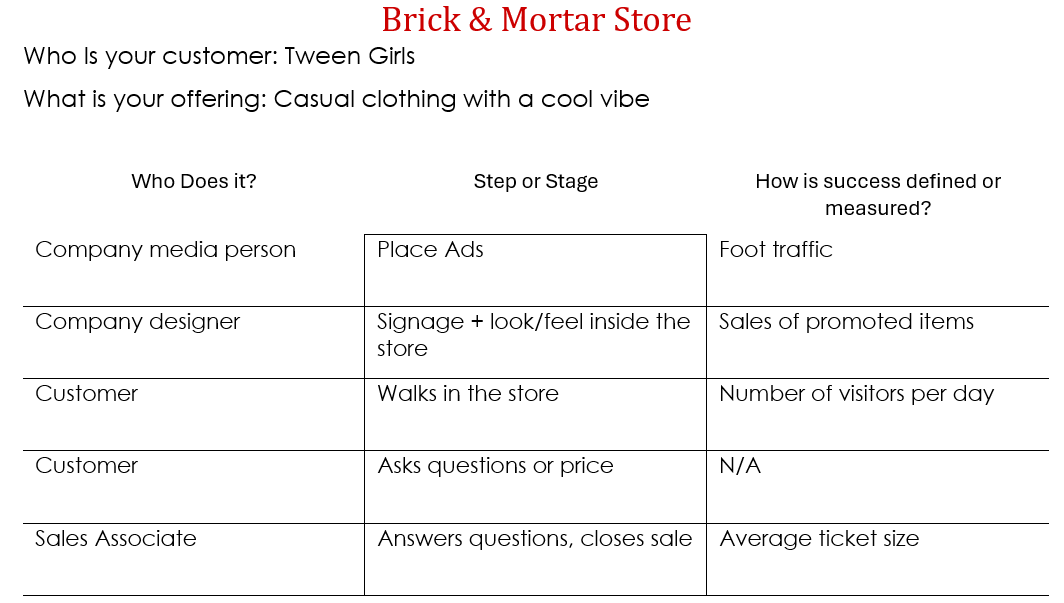
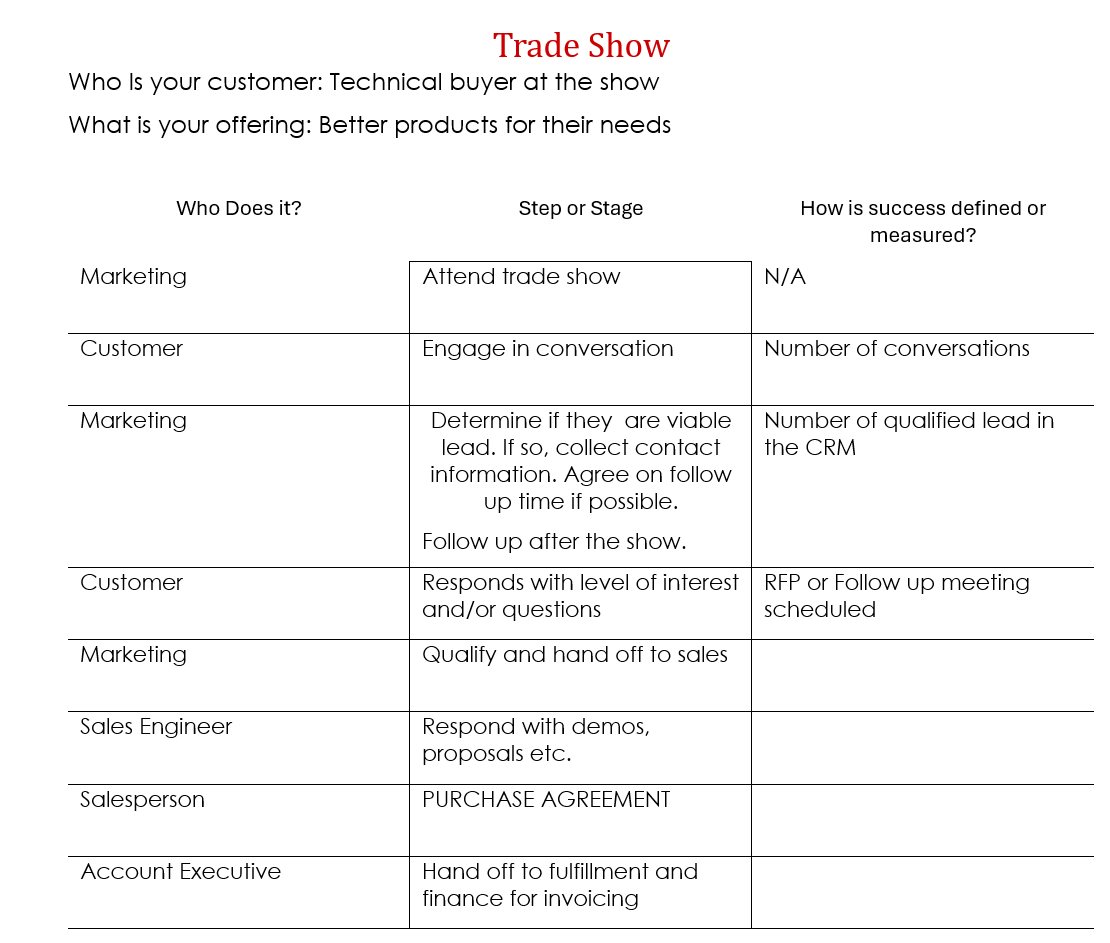
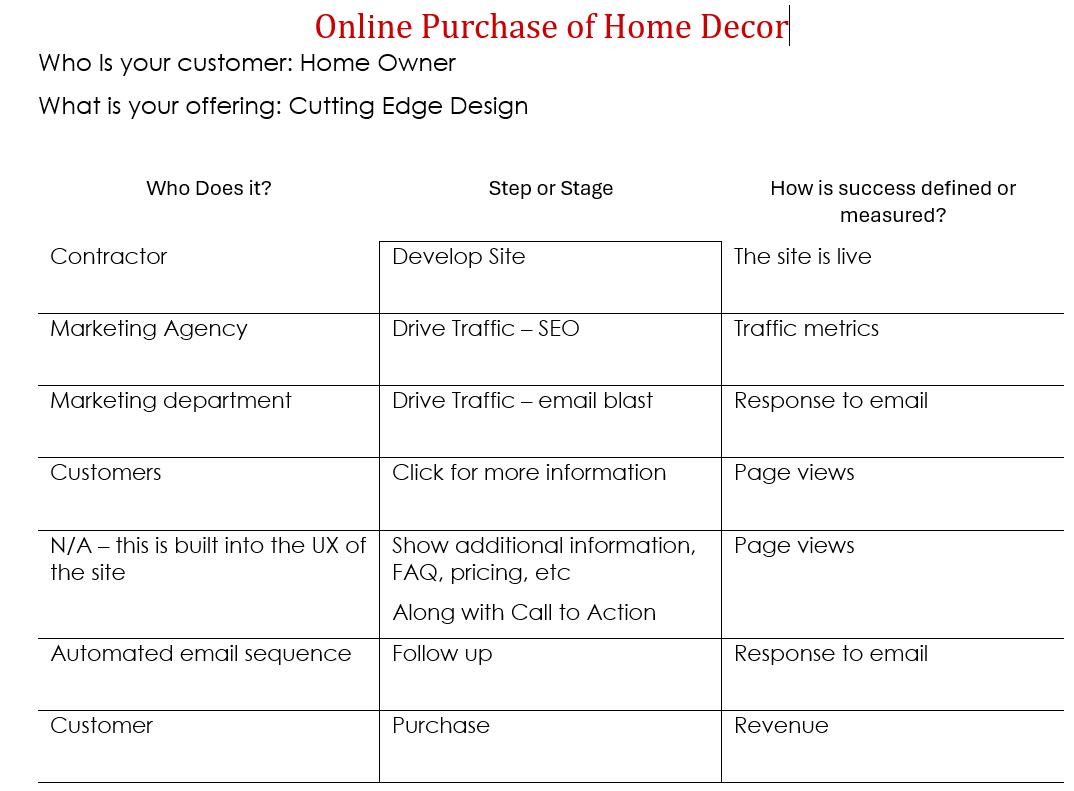
The steps involve how prospects find out about you, how they respond to your offer, how they get comfortable spending money, and how they make the purchase. Notice that this is framed from the prospect’s point of view. That’s important.
The specifics of each step differ by revenue stream. I wrote about revenue streams here. I’ll share the generic template followed by some generalized examples that you can adapt.
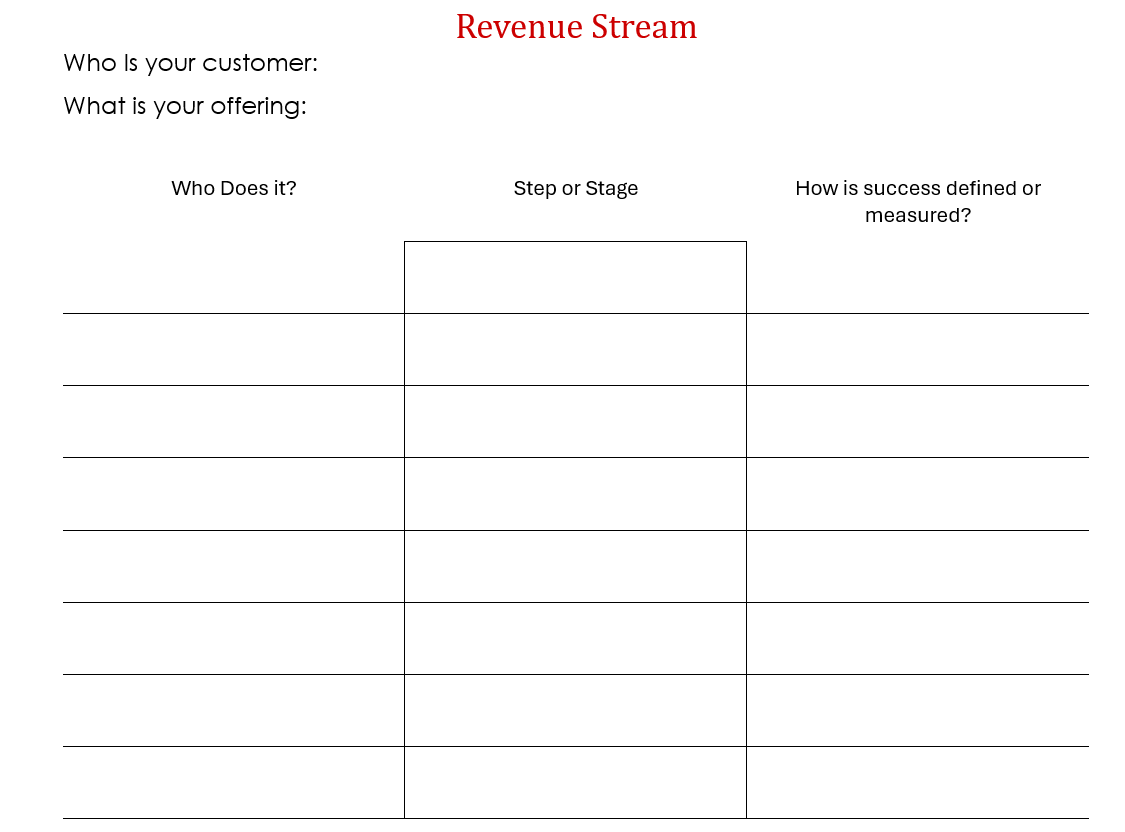
Here are some examples
NOTE: These examples are way too generic - you need to get more detailed for your prospects, how they buy, what offering they respond to etc.
The First Step Isn’t Most Important
The first step in every sales process is getting prospects to know about your company. But that’s not the most important step. The most important part of this process is your offering. If you’re not offering something people care about, in language that resonates with them, you’ll waste a lot of money and time and move very few people from prospect to profit.
The Surprising Conclusion
I told you I was surprised that my client’s team couldn’t agree on when a sale was consummated. I’ve come to find out this is not uncommon in B2B companies. Most have grown without much process. The good news is getting this agreement is not difficult.
What was uncommon was that when we mapped out the stages for this company, it turned out they had no outreach effort at all. That first step was totally absent. They just responded to RFQs that came in over the transom. Customers only knew about them because of their 50-year reputation in the industry. It’s very unusual for a company to do so well for so long with nobody being accountable for what’s usually the first step in marketing.
What’s more common is that companies do many things to get known and most of them don’t work - either because their offering is not great or they don’t track results. So maybe the first step isn’t outreach, it’s research into what motivates your customers. But that’s a topic for another day.
If you’d like a free coaching session to help you map out the steps in moving your prospects to profits, CLICK HERE to find a time that works for you.
A simple but effective framework. Thank you.
Glad to see more sales enthousiasts / professionals on Substack!